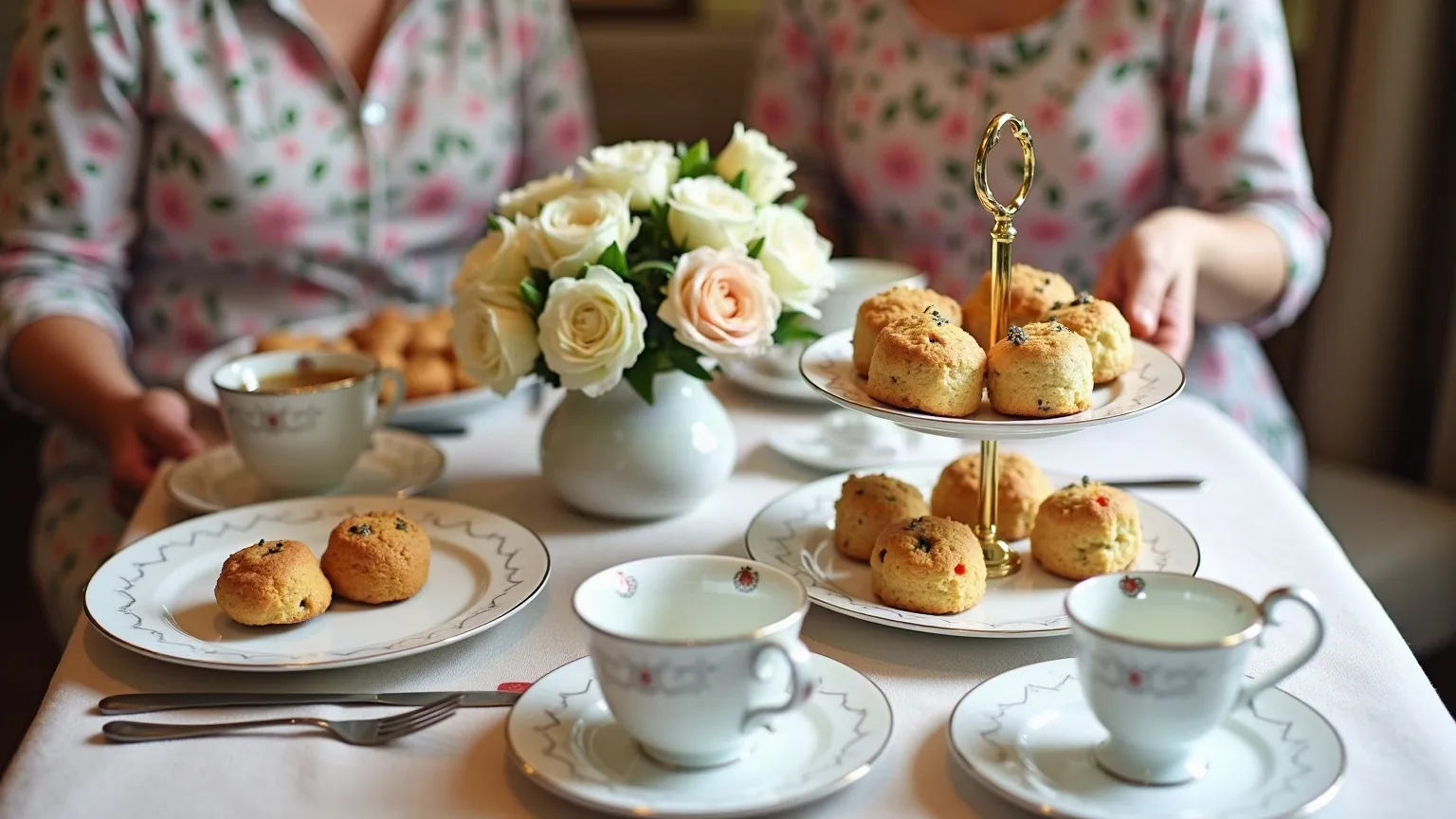
| Tea party format | Guests | Time | Main work |
|---|---|---|---|
| Classic afternoon tea | 6–10 adults | 90 minutes | Sandwiches, scones and small cakes |
| Family tea with children | 6–12 mixed ages | 60–75 minutes | Simple food, low-spill setup and one short activity |
| Budget cream tea | 4–12 adults | 60 minutes | Scones, jam, cream and two tea choices |
These are sample formats, not rigid rules. A cream tea is ideal when you want to catch up without making lunch, whereas the classic format works better when the food is the main event.
1. Classic afternoon tea for eight adults
Serve a modest savoury course followed by scones and small sweet bites. This is a complete example shopping and preparation plan for eight, assuming tea replaces a light afternoon meal rather than a substantial lunch.
| Food or drink | Plan for eight | Preparation |
|---|---|---|
| Finger sandwiches | 32 fingers | Make 8 complete sandwich rounds, cut each into 4 fingers |
| Plain or fruit scones | 12 | One each, with four available for seconds |
| Small cakes or traybake squares | 16 | Two pieces per guest |
| Tea | About 16 cups | Start with enough water for roughly 3.2 L of tea in total, brewed in batches |
| Milk, lemon and water | To preference | Ask about dietary needs and provide drinking water |
A sandwich round means two slices of bread with filling, not an individual finger or quarter. Eight rounds cut four ways make 32 fingers. For three fillings, allocate 3 rounds to cucumber-and-cream-cheese, 3 to egg-and-cress, and 2 to hummus-and-roasted-pepper. Use separate boards and utensils for guests with allergies; a meat-free filling isn't automatically dairy-free or allergen-safe.
These amounts are a starting point, not an exact science. If guests are arriving hungry around lunchtime, increase the savouries or offer something heartier. If they're coming straight after lunch, cut back on the sandwiches. Crumbs on the Table's afternoon tea planning guide also suggests small sandwiches, scones and cake as the core menu, with quantities adjusted to the occasion.
The simplest service order: start with the savouries, bring out warm scones once everyone has settled, then finish with the cakes. Three ordinary plates work every bit as well as a tiered stand.
2. A family tea party that works with children
For five children and three adults, choose food that's familiar, easy to portion and safe for the ages involved. Use everyday plates rather than fragile china, and check with parents beforehand about allergies or foods to avoid.
- Serve a plate of simple sandwich fingers, fruit prepared in age-appropriate pieces, and small scones or plain cakes. Let adults choose their own more adventurous filling if they wish.
- Offer water and age-appropriate drinks. Keep hot teapots, cords and newly poured tea outside children's reach; an adult serves hot drinks.
- Set out one activity rather than an elaborate programme: decorate a paper placemat or make simple table place cards with child-safe supplies. For younger children, an adult supervises small items.
- Seat children where carers can help without blocking a narrow serving area. Start food promptly; do not expect children to sit through a long formal service.
The NHS guidance on babies and toddlers is a helpful reminder to keep age-specific choking, hot-drink and small-object hazards in mind. There's no need to turn an afternoon tea into an exhausting games marathon. If you'd like a dedicated party plan, see our kids' birthday party checklist.
3. A cream tea when time or budget is tight
A cream tea is the simpler option: scones, jam, cream and tea. For eight people, buy or bake 10–12 scones, get a jar of jam and enough cream for generous servings, checking first for any dairy-free requirements. Add a little fruit or a plain biscuit if you want variety. There's really no need to invent a sandwich course and three cakes just to make it look grand.
If you're buying scones rather than baking, compare the cost per scone and check the pack's use-by information. Good-quality tea and properly warmed scones matter far more than decorative extras.
Get the equipment right before adding decorations
The basic kit for eight is straightforward: eight seats, cups or mugs, side plates, and teaspoons, plus napkins, one or two good teapots (or a kettle and tea bags) and enough serving platters. Make sure you have a clear route between the kitchen and table, along with somewhere out of the way for used plates.
Keep cups, milk, sugar and water together so guests aren't constantly reaching across the food. Set up a separate hot-water station if children are around. In a smaller home, serving one course at a time keeps the table from feeling cluttered.
Nice finishing touches include low flowers that don't block eye contact, handwritten labels for the tea choices, and a simple tablecloth. Just ensure nothing gets in the way of serving or obstructs a guest using a wheelchair or walking aid.
A practical 90-minute running order
| Time | What happens | What the host needs to do |
|---|---|---|
| 0:00–0:15 | Guests arrive, first tea is poured | Offer water and check dietary plates |
| 0:15–0:40 | Savouries | Put out the first chilled sandwich tray; keep reserves refrigerated |
| 0:40–1:05 | Scones, jam and cream | Warm scones if suitable; brew fresh tea |
| 1:05–1:25 | Cakes and conversation | Clear savoury plates and offer another drink |
| 1:25–1:30 | Wind down | Package safe leftovers promptly; don't leave chilled fillings standing |
Guests shouldn't feel like they're on the clock. A rough schedule is simply there to stop the host from trying to juggle all three courses at once.
What can be prepared the day before?
You can bake a traybake the day before and slice it once cool, sort out serving platters, write place cards, and prep fillings that keep well. Assemble the sandwiches closer to the time so the bread doesn't dry out, and keep perishable fillings chilled. Brew tea fresh as guests are ready rather than letting a pot stew on the counter for an hour.
The Food Standards Agency's guidance on chilled food recommends keeping fridge temperatures between 0 and 5°C and leaving chilled food at room temperature for as little time as possible. In the US, the FDA's buffet guidance sets a more conservative two-hour limit for perishables at room temperature (or one hour above 90°F/32°C). A sensible approach wherever you live is using small trays, fresh replacements and refrigerated reserves rather than laying out a fully loaded table for the whole afternoon.
Common questions
Do you need a tiered cake stand? Not at all. Bringing out sandwiches, scones and cakes on separate platters in sequence is actually easier to clear away, and it saves guests reaching awkwardly across the table.
How long should an afternoon tea party last? Around 60–90 minutes suits most small gatherings. If you expect people to linger and chat, make sure the seating is comfortable and offer fresh drinks rather than leaving perishable food sitting out.
How much tea should I buy? For an eight-person tea, allowing two roughly 200 ml cups each works out to about 3.2 litres across the gathering. Brew in smaller pots and top up based on what people actually drink, keeping decaf, herbal alternatives and tap water on hand.
Should you invite people by printed card? Only if you enjoy sending them. A clear digital message with the date, start and finish times, address, RSVP details and a note about dietary requirements is plenty. Our party invitation wording examples cover the specifics.
The best tea party is the one that lets you sit down and enjoy the guests. Stick to a small, coherent menu, count your portions, set the table in advance, and keep the service relaxed.