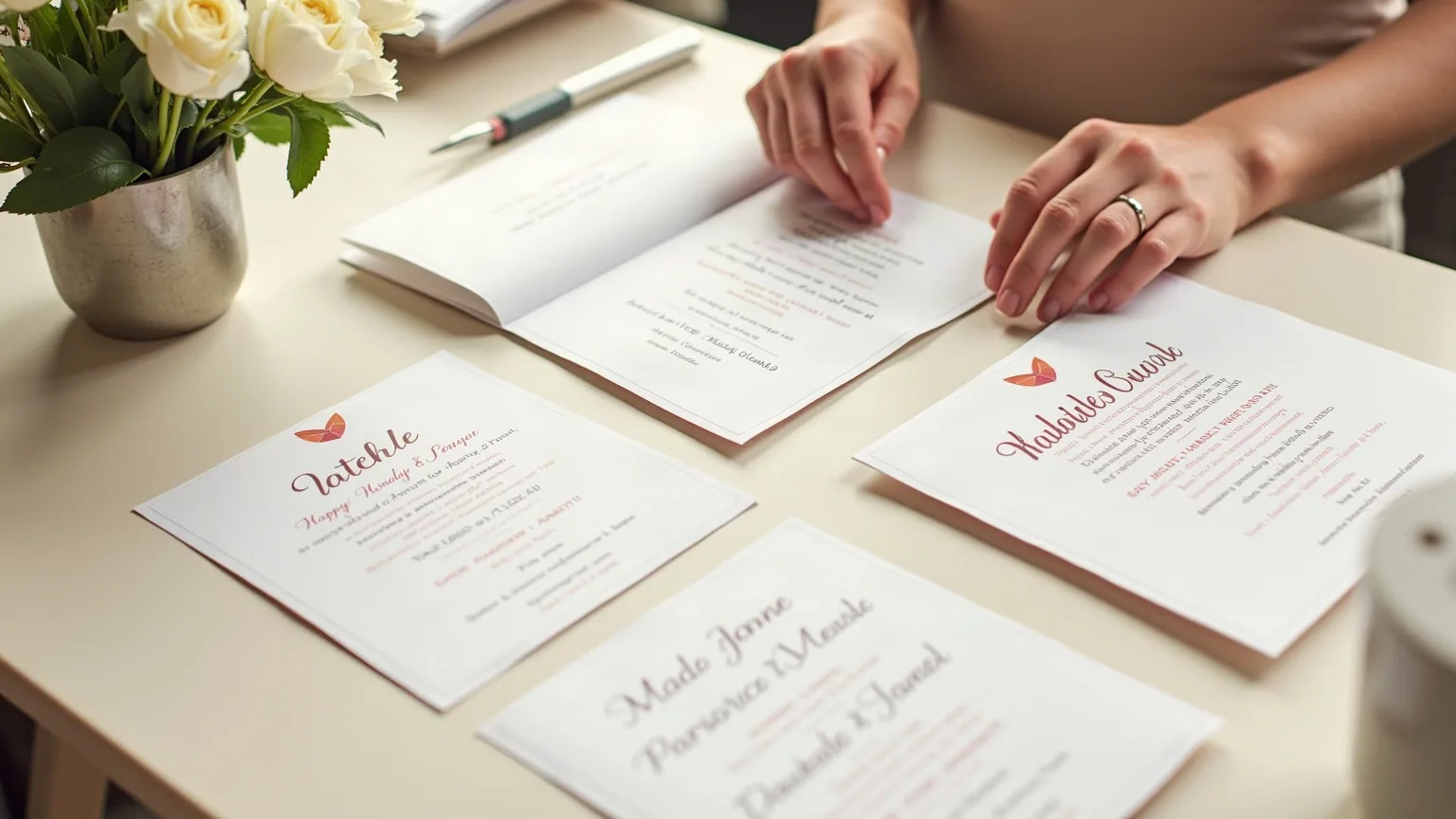
Here are 28 original, copy-ready dress-code lines for casual birthdays, milestone parties, themed events, garden gatherings and formal evenings. You'll also find full invitation examples, a dress-code comparison table and tips on keeping requests welcoming rather than pricey or exclusionary.
Choose the level of formality first
| Dress-code label | What guests will probably expect | Add this to avoid confusion |
|---|---|---|
| Come as you are | Normal everyday clothes | “Comfortable clothes are perfect” |
| Casual | Relaxed clothes | “Jeans and trainers are absolutely fine” |
| Smart casual | Neat but not formal | “Think a smart top and trousers, dress or equivalent” |
| Dressy casual | Slightly more polished than everyday | “No suits or gowns needed” |
| Cocktail attire | Dressy evening clothes | “Dressy separates or a cocktail outfit” |
| Festive | Celebratory clothes, often colour or sparkle | “Optional sparkle or a colourful accessory” |
| Black tie | Formal eveningwear | Specify whether this is required or optional |
| Theme / fancy dress | Costume or themed accessory | Say whether participation is optional |
These are practical explanations, not universal legal definitions; definitions naturally vary by region and circle. The Emily Post Institute's attire guide distinguishes black tie, optional black tie and festive attire, while Debrett's invitation guide stresses that an invitation's wording and overall tone should give useful clues about what to expect.
Casual and relaxed party wording (examples 1–6)
These work well for informal birthdays, housewarmings, afternoon drinks and family get-togethers where nobody should feel pressured to buy anything new.
1. Come as you are
Dress code: Come as you are. Everyday clothes are perfect.
2. Casual birthday
Casual clothes, please — jeans, trainers and comfortable outfits are all welcome.
3. Garden lunch
Dress for a relaxed garden lunch. Comfortable layers and practical shoes are a good idea.
4. Family celebration
No dress code at all. Wear whatever makes you comfortable.
5. A little colour, no obligation
Casual dress. Bright colours welcome if you fancy it, but absolutely not required.
6. Pub get-together
Dress code: Relaxed pub clothes. Nothing formal needed.
For an everyday house party, example 1 or 4 is plenty. Avoid tacking on phrases like “not too scruffy” after calling it casual. If your venue has genuine restrictions, state those clearly and separately.
Smart casual and dressy casual wording (examples 7–12)
A label on its own is often too vague, so pair it with an example. Try not to imply that everyone must own a suit, heels or a dress.
7. Standard smart casual
Dress code: Smart casual — a neat outfit you'd wear for dinner out. No formalwear needed.
8. Smart casual with jeans allowed
Smart casual. Dark or neat jeans are fine; just aim for a slightly dressed-up look.
9. Smart casual, no pressure
We'd love everyone to feel comfortable. Smart casual is the idea, but please don't buy anything new.
10. Dressy casual birthday
Dressy casual: think smart trousers and a nice top, a simple dress, or your own equivalent.
11. Evening at a restaurant
Attire: Smart casual for dinner. The restaurant has [insert any confirmed venue requirements].
12. Relaxed anniversary party
Come ready for a lovely evening. Dressy casual is perfect; jackets and heels are optional.
The venue rule: when a restaurant, club or private venue requires specific footwear or clothing, check its current policy rather than guessing. Distinguish venue rules from your own style preference.
Cocktail, formal and black-tie wording (examples 13–18)
These suit an intentionally dressy celebration. Formal dress codes have established meanings, so avoid using “black tie” if you simply mean “nice clothes”. If you want people looking sharp without strict eveningwear, just say so.
13. Cocktail attire
Dress code: Cocktail attire — dressy evening outfits or elegant separates are welcome.
14. Cocktail, but comfortable
Dress up for the evening if you fancy it. Cocktail-style outfits are the idea, with comfortable footwear welcome.
15. Formal evening
Dress code: Formal evening attire. Please contact us if you'd like guidance on what works for the venue.
16. Black tie required
Black tie requested: tuxedo or equivalent formal eveningwear. Please ask if you need an accessible or practical alternative.
17. Black tie optional
Black tie optional — a tuxedo, formal suit, evening dress or equally dressy outfit are all appropriate.
18. Formal with creative detail
Formal eveningwear with one playful detail if you like — colour, jewellery or a distinctive accessory.
Be clear about required versus optional. As the Emily Post Institute notes, “black tie optional” permits smart formal alternatives rather than demanding a dinner jacket from every guest. If you have no intention of turning away someone in a dark lounge suit, “dressy evening attire” is both kinder and clearer than “black tie”.
Themed and fancy-dress wording (examples 19–24)
A themed party should be fun, not an excuse to spend money on single-use items. These examples give guests a clear theme alongside an easy way to join in using clothes they already own.
19. 1980s party
Theme: 1980s! Full outfits are welcome, but a colourful accessory or retro hairstyle is plenty.
20. Hollywood night
Hollywood-inspired outfits if you fancy it — anything from old-school glamour to a simple sparkling accessory.
21. Garden flowers
Floral theme, completely optional. A flower print, colourful shirt or small accessory fits beautifully.
22. All white, flexible
We're aiming for a white-and-cream look in the photos. If that's not in your wardrobe, light or neutral colours are just as welcome.
23. Fancy dress encouraged
Fancy dress encouraged, never compulsory. Come in costume or wear your usual party clothes.
24. Costume party with a practical caveat
Costumes welcome! Please choose something comfortable to move in, and leave masks off when entering the venue or if staff need to identify guests.
If your theme draws on another culture, profession or community, avoid encouraging guests to caricature identities or wear cultural symbols. Build the event around eras, films, colours, patterns or props instead. For activity-led events, see party themes for adults and cheap party decorations.
Weather, activity and accessibility wording (examples 25–28)
Practicalities matter far more than aesthetics when guests will be outdoors, on their feet for hours, or taking part in games.
25. Outdoor garden party
Garden party dress: comfortable shoes for grass and a light layer for cooler weather. No heels or formal outfits needed.
26. Outdoor sports birthday
Wear clothes you can move in and shoes suitable for grass. Please bring a layer for changing weather.
27. Winter gathering
Smart casual indoors, with warm coats and sturdy footwear for the short outdoor walk to the venue.
28. Accessible, practical option
Festive outfits welcome, but comfort comes first. Wear whatever works for your mobility, sensory needs and the venue.
Avoid asking for heels, particularly when a venue involves steps, slopes or lawn. If guests do need specific footwear for safety—such as for an active game—explain why and provide an easy way to ask about adjustments.
Three complete invitations with dress codes in context
Casual milestone birthday
You're invited to celebrate Sam's 40th! Saturday [date], 7–10 pm, at [venue and full address]. We'll have drinks, nibbles and music. Dress code: smart casual — neat jeans are absolutely fine. Please RSVP to [contact] by [date] and let us know about dietary or access needs.
Dressy evening celebration
Please join us for an evening celebrating Alex and Morgan on [date], from 6:30 pm at [venue and address]. Drinks and dinner will be served. Attire: cocktail — dressy separates and comfortable evening outfits are welcome. RSVP by [date] at [contact].
Children's outdoor activity party
Taylor is turning eight! Join us at [place] on [date], 2–4 pm, for garden games and birthday cake. Clothes and shoes suitable for running on grass, please. Bring a warm layer. RSVP by [date], mentioning allergies or access needs; collection is at 4 pm.
Replace the bracketed details to suit your event, ensuring the host, occasion, date, time, full address and RSVP details are straightforward to find. Debrett's recommends including clear details on both the event and expected attire; party invitation wording covers invitation text as a whole, while this guide focuses on dress codes.
Where should the dress code go?
On a printed invitation, place the dress code directly beneath the venue and timing details, or as a brief line near the RSVP. On digital invites, a simple “What to wear” heading works best. If your theme takes more than a sentence to explain, link to a brief note or follow up separately rather than cluttering the card.
A useful order is:
- Occasion and host.
- Date, start/end times and full location.
- Whether food is served and anything guests need to bring.
- Dress code or theme in one line.
- RSVP deadline and contact, plus any access or dietary question.
Steer clear of tiny, decorative fonts on busy graphics. Anyone reading on a phone screen or using assistive software needs that detail to be legible.
What to say when a guest asks for clarification
If someone texts asking “Are jeans okay?”, give a direct answer. Replying “Just look nice!” simply bounces the uncertainty back to them.
Yes, neat jeans are completely fine. We're aiming for relaxed smart casual, not suits and dresses.
If they ask whether fancy dress is compulsory:
Not at all. We hope the theme is fun, but it's entirely optional. Regular party clothes are absolutely welcome.
If they cannot meet a venue rule or need an accessible alternative:
Thanks for checking. I'll confirm the venue's requirements and help find a suitable option. Your comfort and access matter more than matching a theme.
Before setting an unusual dress request, ask yourself if you really need it. Could a coordinated photo effect be achieved with optional props or a basket of accessories at the door? A hosting preference shouldn't become an obstacle to attending.
Five common dress-code mistakes
| Mistake | Why it fails | Better wording |
|---|---|---|
| “Dress to impress” | Gives no clothing guidance | “Dressy casual; smart trousers, dresses or equivalents” |
| “Black tie-ish” | Contradictory | “Formal eveningwear encouraged, not required” |
| “Fancy dress mandatory” | Can require time and expense | “Costumes welcome; a themed accessory is enough” |
| “Garden chic” | Ignores wet grass and footwear | “Smart casual, comfortable garden shoes” |
| “No trainers ever” | May exclude practical footwear without reason | State a verified venue rule or allow suitable shoes |
Frequently asked questions
How do I say smart casual on a party invitation?
Write “Smart casual — think a neat outfit for dinner; jeans are fine” if you're happy with denim. If jeans aren't allowed, state the venue's rule clearly rather than leaving people to guess.
Can you request a colour without being rude?
Yes, provided it's phrased as a preference rather than an entry requirement: “Blue or green welcome if you have it, but please wear whatever you like.” Avoid putting guests in a spot where they feel they need to buy something new.
Should fancy dress be compulsory?
Generally, optional participation is easier to host. It allows people to join in with a small accessory or wear everyday party clothes, avoids last-minute shopping panic and keeps the tone welcoming.
Does black tie mean a suit is enough?
Not if black tie is strictly required. A dark lounge suit is usually fine under a black-tie-optional code, but not for traditional black tie. When in doubt, check the event's formality alongside the Emily Post attire guide.
Should I mention footwear for an outdoor party?
Yes. Let guests know about grass, gravel, uneven ground or long periods on their feet, especially if the event is otherwise dressy. Practical advice spares everyone ruined shoes and awkward footing.
The best dress-code line is short, specific and generous. Give guests a clear sense of the vibe, offer one tangible example, and make sure attending feels easy and welcoming.