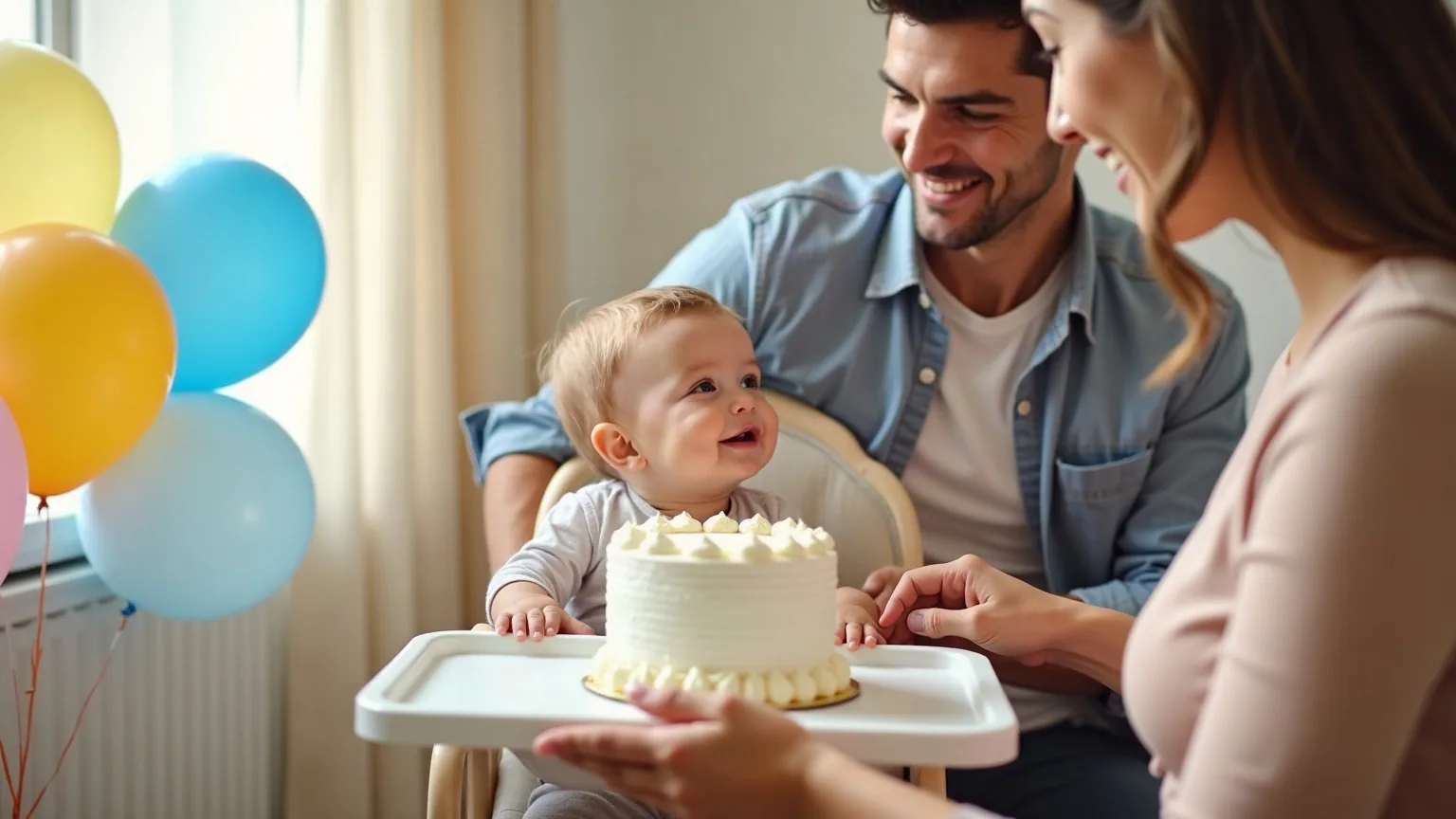
Below are five complete formats, a realistic 90-minute running order and a worked budget. The ideas are adaptable: a child who tires after half an hour needs a very different party from one who happily spends the afternoon with relatives.
Choose the format before the theme
| Format | Best for | Main feature | Preparation required |
|---|---|---|---|
| Family brunch | Small family, early waking child | Breakfast table and photo corner | Food prepared the previous day |
| One Little Garden | Warm day, outdoor space | Blankets, shaded seating and flower jars | A real indoor rain plan |
| Storybook at One | Quiet room, mixed generations | A few favourite books and written messages | Books and plain cards |
| Tiny Art Gallery | Family who wants a keepsake | Display of twelve monthly photographs | Print photos and label the months |
| Afternoon Cake Visit | A child who tolerates short visits | Cake, tea and conversation | Simple cakes and drinks only |
A 90-minute invitation is a sensible guide rather than a strict rule. The real test is whether the timing fits between your child's usual meals, naps and bedtime. The Pampers first-birthday guide also recommends working around sleep schedules and keeping first celebrations simple.
1. Family brunch: make the meal the occasion
Example: 11 adults, four children and the birthday child, from 10:00 to 11:30—provided that timing genuinely suits the baby.
Make the dining table the focal point. Serve a simple breakfast-style spread: mini frittatas, toast, yoghurt, cut fruit prepared appropriately for the ages present, plus tea and coffee. Set a small cake on a sideboard. Place the high chair where an adult can comfortably sit next to it, rather than turning the child into a centre-stage spectacle.
The point of the party is simply spending time together. Invite guests to bring a favourite photograph of the baby or jot down a memory from the first year, then collect them in a keepsake envelope. There are no organised games, so the birthday child can leave the table whenever they've had enough without interrupting anything.
Prep order: lay out plates and cups the night before; chill anything perishable; warm or cook hot dishes just before guests arrive. Ask one relative to take charge of drinks so parents aren't trying to feed a baby and host sixteen people at the same time.
2. One Little Garden: gentle outdoors, not an outdoor obstacle course
Designate a single corner of the garden as the party area. Set out a washable mat, a low basket of large, age-appropriate toys and a couple of jars of flowers placed well out of reach. Arrange chairs so adults can keep an eye on toddlers without blocking paths or exits. Shade and a sheltered spot for feeds will matter far more than bunting.
Weather rule: decide on the indoor layout, seating and food setup before sending invitations. If your living room can't accommodate everyone comfortably, trim the guest list rather than banking on good weather.
A bubble machine makes for lovely photos but leaves hard surfaces dangerously slick; stick to a short, supervised bubble session on grass instead. Watch out for trailing leads, open water in paddling pools, wobbly furniture and small loose decorations within reaching distance. Make sure there is a quiet, familiar room indoors where the baby can retreat if the garden gets overwhelming.
3. Storybook at One: give guests something to do quietly
Pick out four or five books the child already loves and prop them on a shelf. Guests can be invited, if they wish, to write an inscription or short message on blank cards, which go into a keepsake envelope. Make sure invitations don't imply guests are expected to buy a book on top of a gift.
Optional five-minute activity: ask an adult to read the baby's favourite story aloud once. It should be entirely informal—if the child wanders off, simply wrap it up and carry on with tea. There is no need for a structured twenty-minute session.
This approach works brilliantly in a small flat because it requires zero installation and uses things you already have. Just keep anything with paperclips, stickers or small detachable bits well away from crawling babies and younger siblings.
4. Tiny Art Gallery: an easy photographic keepsake
Print a photograph for each month of the baby's first year. Mount them high on a wall using removable adhesive, or arrange the frames along a high shelf out of reach, numbering them 1–12. Ask someone to snap a family photo in front of the display early on, while everyone is still fresh and cheerful.
For an even simpler option, slot the prints into a standard photo album left on an adult-height table. Guests can write notes on blank pages, leaving you with a lasting keepsake that doesn't involve storing or binning a giant backdrop afterwards.
Skip: an elaborate balloon arch behind the high chair. Uninflated balloons and pieces of burst latex pose a serious choking hazard to young children; the American Academy of Pediatrics' choking-prevention advice offers practical guidance on this. Keep all balloons, ribbons and fragments well away from babies, and bin any popped pieces straight away.
5. Afternoon Cake Visit: deliberately small and still special
This works well for a baby who has a reliable afternoon wake window. Invite eight to ten people over for roughly an hour. Offer cake, fruit, tea and a cold drink. A simple paper number one and a framed family photo on the wall are plenty—there's no need to decorate an entire room.
Have one person carry in the cake while another discreetly takes photos. The baby doesn't need to eat the cake for the camera, and there is certainly no need to smear frosting over their face. Offer a small bite of age-appropriate food if you like, or simply enjoy the family photo without feeling pressured to stage a “smash cake”.
When this works best: relatives are travelling varying distances, living space is tight, or you'd rather save the budget for something else. A celebration isn't any less special for lasting only sixty minutes.
A realistic 90-minute first-birthday running order
Here is a sample schedule based on an awake window between 10:00 and 11:30. Adjust the timings to suit your baby's routine.
| Time | What happens | Who handles it |
|---|---|---|
| Before guests | Feed, change and settle baby; bring cold food from fridge only when needed | Parent and food helper |
| 10:00 | Guests arrive; coats and drinks; familiar toys available | Door helper |
| 10:15 | Gentle family photos while baby is comfortable | One nominated photographer |
| 10:25 | Adult refreshments; children eat seated with their own carers | Food helper and carers |
| 10:50 | Short cake moment if the child is content | Parent decides |
| 11:00 | Relaxed conversation; cards or photos | Everyone |
| 11:20 | Clear finish and goodbyes | Door helper |
| 11:30 | Normal family routine resumes | Parents |
The essential contingency: if the baby needs a feed or an early nap at 10:15, another adult can take over hosting. Take photos later—or don't. The guest of honour is under no obligation to stick to the schedule.
Feeding and food safety: the part that matters most
A communal finger-food buffet shouldn't be the main meal plan for visiting babies. Parents know what their child can manage and are usually happier bringing their own food and milk. Check for allergies beforehand, including what goes into the cake, and clearly label anything shared. Ensure all babies are sitting upright and closely supervised while eating.
Small, round foods like grapes and cherry tomatoes must be prepared properly; the NHS guide to preparing food safely illustrates how to slice them lengthways into quarters. Keep whole nuts, popcorn, hard sweets and other choking risks well out of toddlers' reach. The NHS baby and toddler safety guide provides a helpful overview of common choking hazards and small household objects.
Don't assume every baby at the party has reached their first birthday yet. Honey must not be served to infants under 12 months, even baked into other foods, according to NHS infant-feeding advice. It is also wise to check that any snack offered to the birthday child fits what they are used to eating at home.
For the grown-ups, designate a single serving table, keep perishable items chilled until serving, and replenish small platters rather than leaving a giant buffet sitting out for hours. If you are serving chilled food at room temperature in the US, consult the FDA's buffet guidance. Food safety guidelines vary depending on where you live and what you are serving.
Worked budget: small first birthday at home
This is an illustrative allocation rather than a price quote or retail survey. Assuming a budget limit of £150 for roughly sixteen guests (adults and children included), here is how you might divide it:
| Category | Example allowance |
|---|---|
| Food for adults and children | £65 |
| Drinks | £15 |
| Cake or ingredients | £25 |
| Photos, paper and basic decorations | £15 |
| Extra cups/napkins and cleaning supplies | £10 |
| Contingency | £20 |
| Total | £150 |
That works out to £9.38 per invited guest at sixteen guests, rounded to the nearest penny, though head costs vary depending on guests' ages and what you can borrow. If money is tight, host the party between meal times, borrow extra crockery, and skip the party favours. Never cut back on essential food or safe supervision to fund decorations.
Plug your own guest numbers and allowances into the party budget calculator rather than relying on these sample figures.
What to buy, borrow and leave out
Buy: groceries suited to the time of day, a cake if you'd like one, basic tableware if you don't have enough, and any safety essentials. Borrow: extra chairs, serving platters, a spare high chair if safe and practical, photo frames, and a tablecloth. Leave out unless genuinely wanted: party favours, massive balloon arches, bespoke printed tableware, party games for adults, and hired entertainers.
Set up a nappy-changing spot with wipes and a bin, a quiet room for feeds or naps, and a safe ledge for hot drinks well away from small hands. Count actual chairs rather than relying on standing room. Having one reliable friend or family member on drinks and door duty will do far more for the party than another bag of decorations.
Common first-birthday questions
Do we need to invite other babies?
No. Invite the people you actually want to celebrate with. If other babies or toddlers are coming, just make sure each has an adult supervising them, plenty of clear floor space, and a safe place to eat.
What if the baby cries when everyone sings?
Stop singing. A quiet moment over the cake or a calm photo with parents is more than enough. Never force a distressed baby into the middle of a clapping crowd just to get a planned photo.
Should we serve lunch or just cake?
Base the food on the time of day. If you invite people over a normal mealtime, give them a proper lunch. If it's a brief afternoon drop-in, make it clear on the invite that there will be cake and light refreshments so guests know what to expect.
How much notice should we give?
A few weeks' notice is usually plenty for local guests, though those travelling further or booking time off may appreciate more warning. Include clear start and end times, parking details, and your preferences around posting photos of the children online. For phrasing ideas, see the party invitation guide, which is currently being updated.
The guiding decision: keep the gathering centred around your child's comfort. If the baby ends up sleeping through the cake but has a calm, happy day surrounded by family, the party has done its job.